17.9 Million Nigerians Pushed Into Poverty In Three Years As Poverty Crisis Deepens — UN Report Raises Fresh Questions Over Government Policies
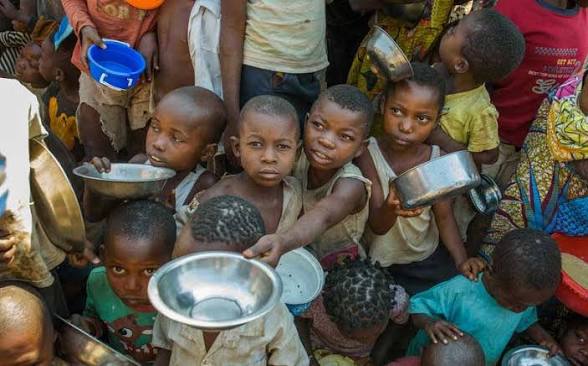
...A damning poverty report has raised fresh concerns about Nigeria’s economic direction, revealing that 17.9 million additional Nigerians fell into multidimensional poverty between 2021 and 2024, exposing the devastating human cost of deprivation in Africa’s most populous nation.
Nigeria is facing renewed scrutiny over its economic policies following a disturbing finding in the 2026 Global Multidimensional Poverty Index, which indicates that an additional 17.9 million Nigerians fell into multidimensional poverty between 2021 and 2024.
The figure represents a sobering indictment of the country's struggle to translate its economic potential into improved living conditions for millions of citizens.
According to the report, Nigeria's multidimensional poverty rate increased from 33 per cent in 2021 to 38.7 per cent in 2024, highlighting the growing number of people experiencing overlapping deprivations in essential areas of life.
The report, associated with the United Nations Development Programme and the Oxford Poverty and Human Development Initiative, places Nigeria among the countries experiencing a significant deterioration in multidimensional poverty during the assessment period.
The figures have raised pressing questions about the effectiveness of economic policies, social protection programmes and interventions designed to shield vulnerable households from worsening hardship.
MILLIONS STRUGGLING WHILE THE COUNTRY SEARCHES FOR ANSWERS
Behind the 17.9 million figure are millions of Nigerians whose daily struggles extend far beyond the money in their pockets.
Multidimensional poverty measures deprivation in several aspects of human development, including education, healthcare, nutrition, sanitation, electricity, drinking water and housing.
This means that the crisis cannot be understood through income alone. A household may be struggling simultaneously with inadequate healthcare, children missing school, unreliable electricity and the absence of clean water.
For millions of families, these deprivations can become a cycle that is difficult to escape, leaving children exposed to disadvantages that may follow them into adulthood.
The consequences extend to unemployment, poor health outcomes, reduced educational opportunities and growing pressure on families already struggling to survive.
The scale of the reported increase raises an uncomfortable question: how can a country with Nigeria's enormous human and natural resources continue to experience such widespread deprivation?
ECONOMIC REFORMS UNDER PRESSURE
The latest findings have also intensified the debate over the relationship between economic reforms and the welfare of ordinary Nigerians.
Successive governments have pursued policies intended to stabilise the economy, improve public revenue, attract investment and strengthen long-term growth. However, the poverty figures underline the importance of examining whether the benefits of economic adjustments are reaching the people who need them most.
When the cost of food, transportation, housing, education and healthcare places essential services beyond the reach of ordinary households, economic progress becomes difficult for citizens to recognise in their everyday lives.
Government officials may point to improvements in selected economic indicators, but citizens facing hunger, unemployment and inadequate public services are entitled to ask how those improvements translate into better living conditions.
The report does not, by itself, establish that any single government policy caused the increase in poverty. However, the figures provide a compelling reason for policymakers to examine the economic and social conditions that contributed to the deterioration.
WHO WILL ANSWER FOR THE HUMAN COST?
The scale of the reported increase demands more than political arguments and competing economic narratives.
Nigerians deserve transparent assessments of poverty-reduction programmes, clear explanations of how public resources are being deployed and measurable evidence that interventions are improving living standards.
Federal and state governments must demonstrate how their budgets, social investment programmes, education policies, healthcare interventions and employment initiatives are addressing the needs of vulnerable communities.
There is also a need for stronger accountability in the implementation of poverty-alleviation programmes to ensure that public funds reach their intended beneficiaries rather than disappearing into administrative inefficiencies, waste or corruption.
For a country where millions of people depend on informal employment and unstable incomes, effective social protection and access to basic public services remain essential.
The central question is no longer simply how much money the government spends, but whether that expenditure produces measurable improvements in the lives of ordinary citizens.
A WARNING NIGERIA CANNOT AFFORD TO IGNORE
The reported increase in multidimensional poverty is a warning that the country's development challenges cannot be addressed through economic statistics alone.
A nation’s progress must also be measured by the number of children who remain in school, the families who can afford healthcare, the communities with access to clean water and electricity, and the workers whose incomes can support a decent standard of living.
If millions of Nigerians continue to experience multiple forms of deprivation, the consequences could extend beyond household hardship to public confidence, social stability and the country's long-term development prospects.
The figures should therefore trigger an urgent, evidence-based review of poverty-reduction strategies, with particular attention to the communities and households experiencing the most severe deprivation.
For millions of Nigerians, poverty is not a statistic in an international report. It is the daily struggle to eat, survive, educate their children and preserve their dignity.
The government and political leaders must confront that reality with policies that deliver measurable results.
THE BIG QUESTION: IF AN ADDITIONAL 17.9 MILLION NIGERIANS FELL INTO MULTIDIMENSIONAL POVERTY IN JUST THREE YEARS, WHAT CONCRETE STEPS ARE BEING TAKEN TO REVERSE THE TREND AND PREVENT MILLIONS MORE FROM SLIPPING INTO DEPRIVATION?
Nigerians deserve answers backed by evidence, not political slogans.











0 Comment(s)