“₦9 TRILLION GONE, 36 STATES WAITING!” — Makinde Accuses Tinubu Of Spending NLNG Dividends, Says Payment Delayed Until After 2027 Elections
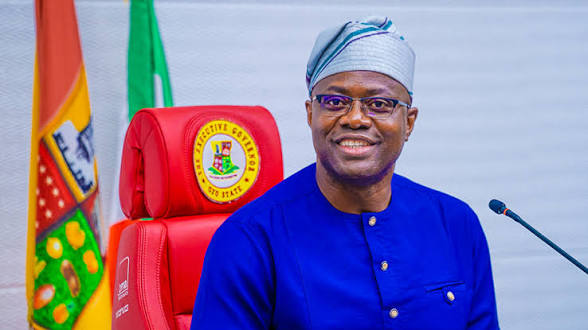
......OYO GOVERNOR QUESTIONS WHY POLITICAL ELECTIONS SHOULD TAKE PRIORITY OVER NIGERIANS’ WELFARE AS HE ALLEGES THAT 36 STATES ARE OWED ₦250 BILLION EACH
Oyo State Governor Seyi Makinde has accused President Bola Tinubu’s administration of spending approximately ₦9 trillion in dividends from Nigeria Liquefied Natural Gas Limited (NLNG) that, according to him, were expected to be distributed among Nigeria’s 36 states.
Makinde further alleged that state governments had been told to wait until after the 2027 general elections before receiving the money, raising questions about fiscal transparency, the distribution of public revenue and the potential impact of the delay on development projects across the country.
The governor made the allegations on Friday while speaking at a stakeholders’ consultative engagement on the 2027 budget at the University of Ibadan.
According to Makinde, each state was expected to receive more than ₦250 billion from the funds, which he said had already undergone a consultancy and reconciliation process.
“They fooled us. The Nigeria LNG paid dividends to the federal government, which went straight into the Federation Account, but they spent it,” Makinde said.
He alleged that the Federal Government spent the money without distributing the expected allocations to the states.
“So, what do we do? They did the consultancy, reconciled the figures, and each state of the federation was supposed to be paid, but they spent the money alone. The federal government spent it alone,” he stated.
₦250 Billion Per State: Projects Put On Hold?
Makinde said his administration had already identified development projects that would have benefited from the anticipated funds.
According to the governor, the money could have been invested in initiatives designed to expand economic activities and support development across Oyo State.
“Each state should receive more than ₦250 billion. Okay. We were planning towards this, identified projects that we can invest the money in to further expand the economy of Oyo State,” he said.
If the figures cited by Makinde are confirmed, the alleged delay could have significant implications for state governments that had incorporated the anticipated revenue into their development plans.
However, the precise amount available for distribution, the applicable allocation formula, the status of the funds and the circumstances surrounding their alleged expenditure would need to be independently established.
“Is The Election More Important Than The People Of Nigeria?”
The most contentious aspect of Makinde’s allegation concerns his claim that the states would not receive the money until after the 2027 general elections.
The governor questioned whether electoral considerations should determine when state governments receive funds intended for public development.
“Now, they say they are not going to pay that money until after the election. Is the election more important than the people of Nigeria?” he asked.
Makinde also suggested that political calculations might explain the alleged delay.
He speculated that the Federal Government could be concerned that governors would use the money to support opposition candidates during the elections.
“Well, maybe they felt that when they pay the money to the states, the governors may have control over it and use it to work against you,” he said.
He added: “Even at that, are you saying the election is more important than the people of Nigeria? Even if they use the money to work against you, is it your money?”
The allegation introduces a politically sensitive question about whether the timing of public revenue disbursements could be influenced by electoral considerations.
However, Makinde’s suggestion about the government's possible motive remains an allegation and has not been independently established.
₦9 Trillion Question: Where Is The Money?
Beyond the political controversy, the allegation raises questions that Nigerians may reasonably expect the relevant authorities to address.
If the NLNG dividends were intended to be shared among the states, what amount was received, when was it received, and under what legal and financial arrangements was it handled?
Was the money formally approved for distribution to the states, and had the final allocations been agreed upon before the alleged expenditure?
If the funds were spent, which expenditure items received the money, and what records are available to explain the transaction?
Most importantly, what official documentation supports the claim that each state was entitled to more than ₦250 billion?
These questions are central to determining whether the controversy concerns delayed revenue distribution, a disagreement over the allocation of funds or an alleged diversion from an agreed financial arrangement.
The distinction matters because NLNG dividend receipts, Federation Account distributions and the revenue entitlements of the federal, state and local governments are governed by financial and constitutional arrangements that require documentary clarification.
Political Stakes Ahead Of 2027
Makinde's comments come as political parties and potential candidates prepare for the 2027 general elections.
The Oyo governor is identified in the supplied report as a presidential candidate contesting under the Allied Peoples Movement (APM).
His allegation places the management and distribution of public revenue at the centre of an emerging political debate over accountability, federalism and the financial capacity of state governments.
Nevertheless, the political context does not by itself establish that the funds were withheld for electoral reasons. That claim requires evidence beyond the governor's interpretation of the circumstances.
Presidential aide Bayo Onanuga had not immediately responded to requests for comment on Makinde's allegation, according to the report.
A response from the Presidency, the Federal Ministry of Finance and the relevant revenue authorities would be important in clarifying the status of the funds and addressing the questions raised.
Nigerians Deserve Answers
For citizens facing economic pressures and communities waiting for roads, healthcare facilities, schools, electricity and other essential infrastructure, the central issue is not simply which political party benefits from a financial dispute.
It is whether public revenue is being managed transparently, whether governments receive the funds to which they are legally entitled, and whether money earmarked for public purposes is used in accordance with established rules.
If Makinde's figures are accurate, the scale of the alleged financial dispute warrants a detailed public explanation.
If the figures or his interpretation of the arrangement are disputed, the relevant authorities should publish the records necessary to clarify the matter.
The central question remains: What is the documented status of the alleged ₦9 trillion in NLNG dividends, and what financial arrangement determines whether and when the 36 states should receive the money?
Until the relevant records and an official response are available, Makinde's statements remain allegations requiring verification.
0 Comment(s)