Tesla Unveils Flying Car With Rocket Technology, But Buyers May Wait Until 2028
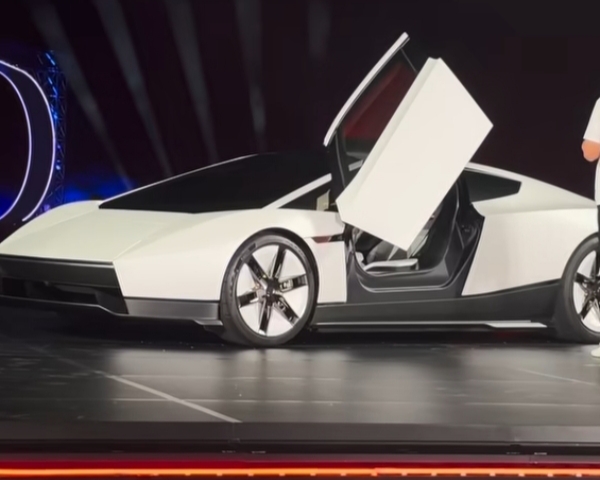
CHICAGO — Electric vehicle manufacturer Tesla has unveiled its second-generation Roadster sports car, featuring rocket-inspired technology designed to propel the vehicle into the air for short bursts and perform mid-air spins. However, despite the futuristic demonstration, customers may have to wait until 2028 before production begins.
The unveiling took place on Thursday at a SpaceX rocket testing and development facility in Texas, where executives showcased the vehicle's advanced engineering features, including cold-gas thrusters and a multi-mode suction system intended to help the car lift off the ground briefly.
Tesla Chief Executive Officer Elon Musk subsequently took to his social media platform, X, to declare: “Turns out the future does have flying cars.”
The announcement has reignited excitement about the possibility of flying automobiles, although significant questions remain about the vehicle's practicality, safety and eventual approval for use on public roads.
Rocket Technology Powers Tesla's Ambitious Roadster
According to Tesla executives, the new Roadster incorporates technology borrowed from SpaceX, Musk's rocket company, to achieve its unusual aerial capabilities.
Beyond its ability to make short jumps and perform mid-air manoeuvres, Tesla claims the sports car can accelerate from zero to 60 miles per hour (approximately 96.6 kilometres per hour) in less than one second.
If achieved under the stated conditions, that acceleration would represent an extraordinary performance benchmark for a production sports car.
However, the demonstration has not eliminated questions about whether the vehicle's advertised capabilities can be translated into a commercially available car that meets safety and regulatory requirements.
Legal Experts Question Whether Flying Cars Can Use Public Roads
Despite the excitement surrounding Tesla's announcement, legal experts have raised concerns about the regulatory challenges associated with allowing vehicles to lift off and fly above ordinary road traffic.
David Vladeck, a Georgetown University law professor and former director of the Federal Trade Commission's Bureau of Consumer Protection, questioned whether individual states would permit drivers to elevate their vehicles while travelling on public roads.
“I'm not sure every state is going to allow a driver in the middle of traffic to suddenly elevate himself and fly,” Vladeck said.
He added that allowing such vehicles on public roads would involve a lengthy approval process.
The concerns highlight the distinction between demonstrating a vehicle's ability to leave the ground and obtaining permission to operate it safely in public spaces.
Authorities would need to address questions involving traffic safety, vehicle certification and the rules governing vehicles capable of aerial movement.
Customers May Have to Wait Until 2028
Despite the unveiling, Tesla's latest Roadster is not expected to enter consumer production until 2028, according to Musk.
The company had not immediately announced a price for the vehicle.
Tesla was accepting reservations for the Roadster on its website on Friday morning, but the terms and conditions reportedly stated that a reservation did not guarantee when the vehicle would be delivered or whether delivery would occur at all.
The announcement comes after years of delays and anticipation surrounding the next-generation Roadster.
Tesla shares initially climbed during Friday morning trading before falling amid a broader sell-off involving companies associated with artificial intelligence.
The production timeline means prospective buyers may have to wait more than a year before the vehicle is expected to enter production, with its actual availability still uncertain.
Former Transportation Adviser Questions Tesla's Claims
Bryant Walker Smith, a law professor at the University of South Carolina and former vice chair of a Department of Transportation advisory group on innovation, expressed scepticism about the significance of Tesla's demonstration.
Smith described the unveiling as a demonstration of a one-off vehicle using technology that has existed for years.
He also questioned whether the vehicle would be permitted on public roads by 2028.
“Tesla pretty uniquely has been able to sell itself on a future that is an order of magnitude greater than reality,” Smith said.
His remarks underscore the broader debate surrounding Tesla's futuristic product announcements: whether the company's technological demonstrations will translate into practical, commercially available vehicles within the timelines presented.
Flying Cars: Innovation or Another Unfulfilled Promise?
Tesla's latest Roadster announcement places the company at the centre of renewed discussions about the future of transportation.
The prospect of a sports car capable of briefly lifting off the ground and performing aerial manoeuvres could represent a new direction in automotive engineering. However, the technology also raises questions about passenger safety, road regulations, reliability and the practical purpose of such capabilities in everyday driving.
For prospective customers, the immediate question is not simply whether the Roadster can leave the ground, but whether Tesla can deliver a commercially available vehicle that lives up to its claims.
With production not expected to begin until 2028 and regulatory questions still unresolved, the public may have to wait several years to discover whether Musk's vision of a flying car becomes a reality or remains an ambitious technological demonstration.

0 Comment(s)