Setting the Record Straight on the Niger Delta Struggle ; How Boyloaf Shifted the Focus to an OIL WAR - By Jude Gbaboyor - Part 2
- by Elaye, Bayelsa, HSN
- about 22 hours ago
- 99 views
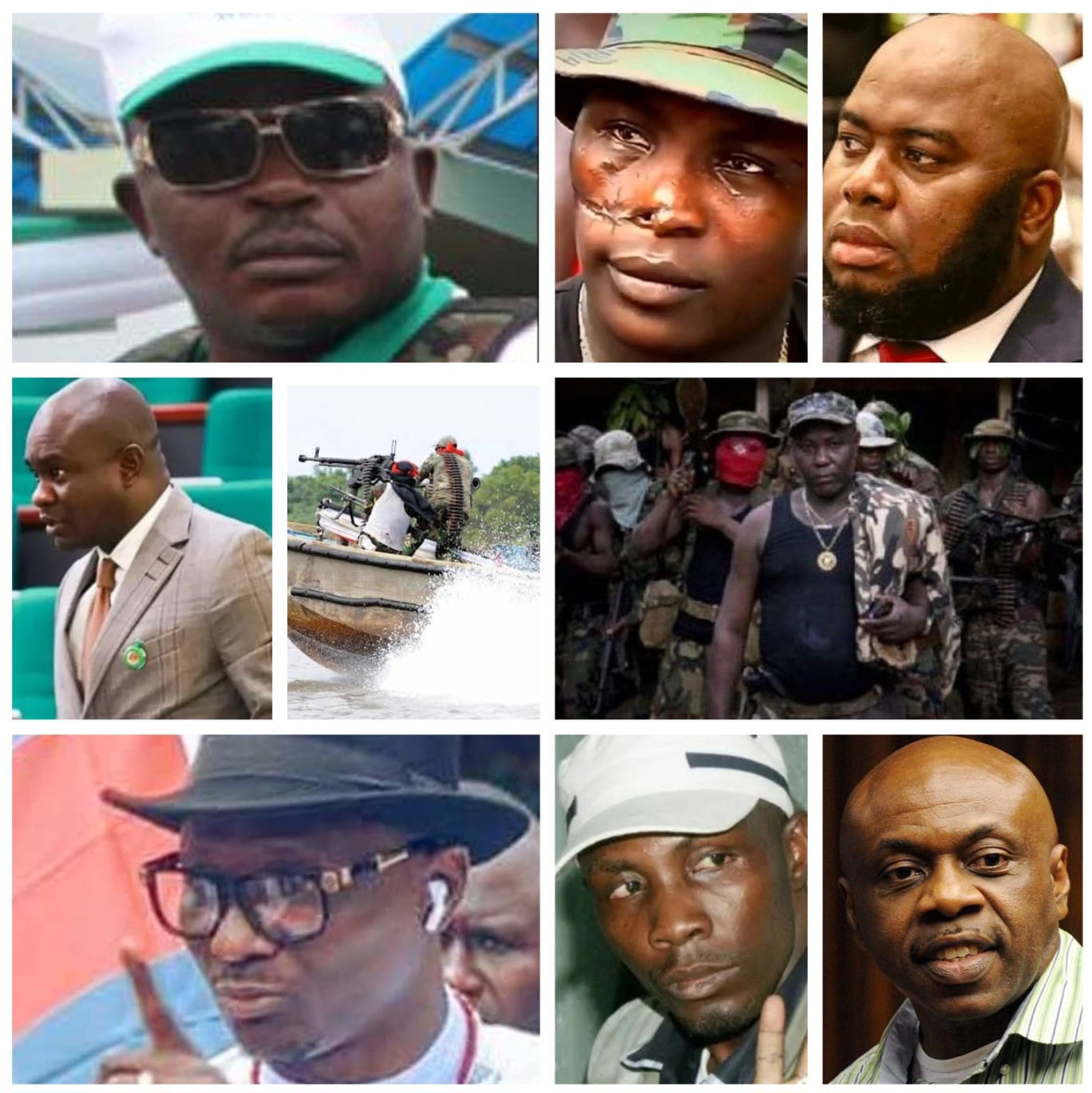
....The Arrest And Release Of John Togo, The Attack On Farah Camp, The Takeover Of EA Oil Fields As A Loading Point, The Planned Jailbreak For Okah, The Fallout Between Okah And Boyloaf, And Other Key Events
Amongst Ijaw people, there is a strong belief that an Ijaw man is an Ijaw man, no matter where he comes from or what circumstances he finds himself in.
That belief became important when John Togo found himself in serious trouble. He had been accused of sea piracy and other crimes and was being hunted by the Nigerian Army. At the same time, Tompolo was also said to be after him.
There was fear that Tompolo saw John Togo as a rival who could become stronger than him.
With his life in danger, John Togo and two others ran to Asari Dokubo for protection.
The people from Delta State who wanted John dead approached Asari and demanded that he hand him over. But Asari understood what would happen if he did. He believed that handing John Togo over would mean the end of John's life and the lives of the two men who were with him.
Instead, Asari handed John Togo and the other two men over to the police so that they could face prosecution legally.
Boyloaf and the Three Men
At the time, General Boyloaf was already operating in Bayelsa State. Some members of the Delta squad approached him and told him about their brothers who had been in prison for years.
They pleaded with Boyloaf to help them.
They said the three men had been wrongly accused and that nobody was standing in court against them. They asked him to find a way to secure their release.
Boyloaf agreed.
His position was simple: they were Ijaw people, and if nobody was standing against them in court, he would do what he could to help.
John Togo, Peter Doulobiowei and Julius Mabeke was released
Boyloaf sent money and the process of securing their release began. Within a few months, one of the most feared Ijaw man in Delta State, John Togo, was out of prison.
As soon as John and his men regained their freedom, John asked to meet the man who had helped bring him out of prison.
Within 48 hours, John Togo arrived at Boyloaf's barrack in Bayelsa State.
When he saw what was happening and understood the struggle Boyloaf was involved in, John decided to join him. He wanted to contribute his own part to the emancipation of the Niger Delta region.
Tompolo Becomes Afraid
News of John Togo's release quickly reached Tompolo. Tompolo knew about the events that had led to John Togo's imprisonment and the deaths of some of John's men. He became deeply worried about what John's return might mean.
Tompolo increased security around his area. He feared that Boyloaf and John Togo might attack him.
Tompolo eventually called Boyloaf and accused him of bringing John Togo out of prison so that John could be used against him.
Boyloaf told him there was no such plan.
He explained that he had only helped John because an Ijaw man had been sitting in prison for years, with nobody properly standing against the accusations in court.
But Tompolo remained afraid.
There is an old saying that a man who knows how to kill with a machete will always be careful when another man walks behind him carrying one.
Boyloaf understood Tompolo's fear and decided to remove every doubt. He left his base with serious instructions in case anything goes wrong at Tompolo's place. He took John Togo, Peter Doulobiowei and Julius Mabeke to meet Tompolo at Camp 5.
When they arrived, Tompolo was happy to see them. He and John Togo reconciled, along with the other men.
Boyloaf went even further. He asked both sides to take an oath with Tompolo that none of them would attack the other
After the reconciliation, Boyloaf and his men returned to the Bayelsa.
John Togo and his men then became part of Boyloaf's operations. They took part in some of the strikes launched from Boyloaf's camp, including the Bakassi Peninsula and the Bonga Field operations.
Boyloaf Takes Control of the EA Oil Field
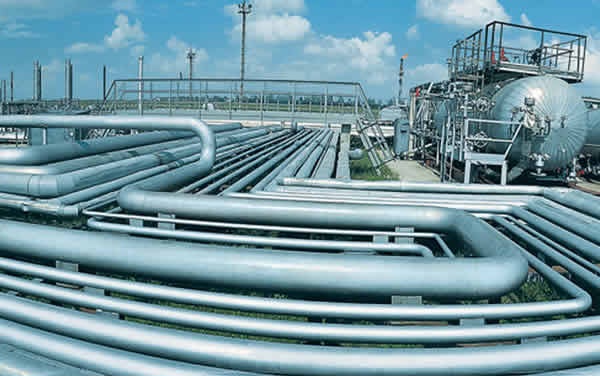
Boyloaf took control of the EA Field Oil Terminal that was shut down by shell and turned it into a crude oil loading point by making it functional. Seagoing vessels were brought in to load Nigerian crude, with the proceeds used to maintain the fighters in the barracks and procure arms and ammunition.
The government soon received information that the EA Field had been converted into an active crude oil loading point. In response, the Nigerian Navy dispatched a security boat and a service vessel to shut down the flow of crude from the terminal so that no one could make use of it.
However, before the vessels reached the EA Field, information about their movement reached Boyloaf and his men. Once the Nigerian Navy vessels entered the waters approaching the terminal, Boyloaf ordered two boats carrying his fighters to intercept them.
The team was led by Jude Gbaboyor, secretary-general of the highest MEND barrack, alongside Commander Shaka, the late Shadrack, also known as Mamiwater, and other young fighters. Seven men were placed on each boat.
When they encountered the Nigerian Navy security boat and the service vessel, an armed confrontation followed. Boyloaf's fighters overpowered the naval personnel, seized their weapons and ammunition, and took the naval officers and service-boat crew hostage. The captured security boat was then towed back to Boyloaf's barracks.
The Call From the Naval Base
The following day, a line of communication was established. The Commanding Officer of the Warri Naval Base contacted Boyloaf and appealed for the release of the naval personnel and the security boat.
Boyloaf agreed to release the men and the boat without demanding payment. However, he maintained that the seized arms and ammunition would remain with his fighters. He also warned that government security personnel should not enter their territory again.
Boyloaf subsequently ordered the release of the hostages and returned the Nigerian Navy security boat.
The Government's Second Attempt
The government, however, did not abandon its efforts to shut down the EA Field Terminal so that Boyloaf would no longer be able to use it. On the following attempt, a helicopter was sent directly to the EA Field Terminal to stop the flow of crude oil.
Once again, Boyloaf's men received information about the operation before the helicopter arrived. This time, four gunboats were prepared, with mounted heavy machine guns positioned on two of them. The same group of fighters, led by the previous commanders, was mobilized to defend the terminal.
When the fighters reached the EA Field Terminal, the workers stationed there reportedly saw the approaching boats and immediately retreated into the helicopter. The helicopter then took off and left the area.
The confrontation marked the point at which Boyloaf's fighters effectively secured control of the EA Field Terminal, preventing government forces from carrying out their intended shutdown at that time.
The Attack On Farah Camp in Rivers State
Later, the administration of Rotimi Amaechi launched a serious military operation against a militant camp associated with Farah Dagogo in Rivers State.
As the fighting intensified, important people began calling Boyloaf and asking him to help Farah. Their concern was that if the government succeeded in defeating Farah, other militant groups could become the next target.
The late Senator Brigidi and late EK Clark was among those who reached out. Even Tompolo became worried that the situation could eventually reach his own area. He also contacted Boyloaf and asked him to help.
Boyloaf initially called Ateke Tom and asked him to join the operation in Rivers State.
Ateke was ready. But Boyloaf later changed his mind for security reasons. Instead, he assembled the Rivers State fighters in his camp. The group was headed by General Ofoblo, with a few men from Delta, Ekeni and Ezetu joining the operation.
They moved toward Rivers State on the rescue mission. When they arrived, heavy gunfire followed in the areas of Kola and Soku and they challenge the Nigerian military.
There were exchanges of fire and the military men was push back, and eventually Farah's men were given some breathing space. Boyloaf's men then withdrew and returned to their base.
Ateke Tom Joins the Fight
Ateke later heard about the operation. He called Boyloaf and reminded him that he had promised to inform him before launching the attack so that he could join.
Boyloaf explained that there had been a change of plan and asked him not to be angry. He told Ateke that there was a need to attack some of the oil flow stations within a short time, in order to send a strong warning to the state government.
Ateke's fighters then moved in. They attacked and burned down the Orubiri Flow Station and others around the area.
The riverine areas of Rivers State became a battlefield. The pressure created by the combined operations of Boyloaf and Ateke Tom, forced the military to pull back totally.
The Rivers State Government later investigated the attacks, and a security report was given to the Governor stating that superior firepower from a neighbouring state had crossed into Rivers State and joined the militants in the rescue of Farah Camp.
The Okah Operation
Then came another chapter involving Henry Okah. After several attacks on oil facilities by Boyloaf's men, Okah was arrested in Angola and later extradited to Nigeria to face prosecution.
He was taken to an Army barracks in Bauchi. Boyloaf once again prepared for a major confrontation with the Nigerian military. This time, the plan was to break Okah out of prison and take him away by force.
The plan had already been arranged with Okah's brother.
A bulldozer was supposed to be used to break through the military fence and the prison during the operation.
Boyloaf had already sent eight experienced fighters to Bauchi for the mission. They were led by the late John Togo, Peter Doulobiowei, Mabeke Julius, the late Asi, and four others. Sophisticated weapons had also already been put in place.
But when the day of the operation came, the fighters had prepared for the showdown. Okah's brother became afraid and refused to provide the bulldozer vehicle. He switched off his phone and disappeared into thin air.
Boyloaf immediately sensed that something was wrong. He ordered his men to withdraw. The eight fighters left Bauchi that very night for Abuja before later returning to base.
The Beginning of the Amnesty Negotiations
Not long after that, the Federal Government approached Boyloaf through the Nigerian DSS in an effort to restore peace in the region. The government pleaded with him to lay down his arms and give peace a chance.
They promised development in the Niger Delta, training and empowerment opportunities for young people, as well as the reintegration of the fighters into society. Boyloaf, however, responded to the DSS that Okah must be released before any peace talks could take place.
Okah was the reason for the Bonga Field attack, and his release was a priority for Boyloaf and his fighters.
Okah was also informed about the government's proposal.
Boyloaf and Okah reached an understanding that Okah would have to be released, before the negotiation could be considered complete.
While the negotiations were taking place, another problem was developing.
Tompolo's men killed a military officer and others because the officer discover illegal crude oil barge close their camp. The situation quickly became dangerous for Tompolo and his men.
The military began hunting them.
The military, led by former JTF commander Brigadier General Saki Bello, then invaded Tompolo’s camp and some communities in Gbaramatu Kingdom following the killing of a senior military officer.
Many of Tompolo’s men were killed, and he was forced to flee into the bush and became a fugitive.
Boyloaf Mobilises Militant Groups for a Rescue Mission
Boyloaf gathered all the militant groups in Bayelsa for a showdown, preparing for a rescue mission in Delta State. The Nigerian JTF got wind of the rescue mission from Bayelsa State.
Brigadier General Saki Bello called Boyloaf and told him that he had received information that Boyloaf was about to enter Delta State to rescue Tompolo. Bello then reminded Boyloaf that he was involved in the Niger Delta struggle and was fighting for a genuine cause.
He said they were aware of this and understood that the government was trying to make peace with him.
However, regarding Tompolo, Bello said he had focused on illegal bunkering alone and had killed a senior military officer, which led to the invasion of his camp. He added that the military had no issues with Boyloaf.
Boyloaf Deploys Fighters for Tompolo Rescue Mission
Boyloaf consulted with his commanders, held a security meeting, and concluded that John Togo and other men should assist Skelly, aka Young Shall Grow, and his group with the rescue mission, while the other fighters remained in Bayelsa State to protect the territories.
John Togo and Young Shall Grow then moved to rescue Tompolo. When they reached the area, Tompolo was surprised that John Togo and his men had come to help him.
However, Tompolo told John that he had already left the area and was safe. He asked John to go back for now.
Young Shall Grow and his fighters nevertheless moved into the danger zone and exchanged gunfire with Nigerian soldiers before eventually leaving the area and returning toward Bayelsa.
Boyloaf accepted the government's call for peace in the region.
Okah was eventually released. The government had fulfilled its part of the agreement.
Yar’Adua Meets Boyloaf During Bayelsa Visit
There was a scheduled commissioning of projects in Bayelsa State, which provided an opportunity for the President to travel to the state.
However, the main reason for the visit was to see Boyloaf. When the President landed in Bayelsa, Boyloaf was already on the ground, and a meeting between him and the President was arranged by Timipre Sylva.
The President saw the man behind the mask of the Niger Delta struggle, and Boyloaf assured him that peace would prevail. The meeting provided an opportunity for both sides to discuss the peace process and the future of the region.
Yar’Adua then asked Boyloaf to come to Abuja to complete the process and promised him that he would not regret his decision to embrace the peace accord.
Okah and Boyloaf Disagreement
When Okah came out of prison, he made a request that would change their relationship.
He told Boyloaf that he should not bring the boys out from the creeks and must not accept the peace agreement, because the government was looking for a way to arrest him and that there was another mission to be accomplished.
The Proposal to Topple the Government of Equatorial Guinea
Okah proposed that they topple the government of Equatorial Guinea.
Boyloaf laughed.
He told Okah that he could not do it.
He had given the government his word. The government had also played its part by releasing Okah.
For Boyloaf, his word was his word.
He was going ahead with the peace agreement.
That was where the disagreement between Boyloaf and Okah became serious.
Okah was angry that Boyloaf would not follow his instructions.
Boyloaf, on the other hand, came to believe that Okah was not being honest with him.
Boyloaf eventually began bringing fighters out of Bayelsa and Delta states.
Rivers State also followed the process, and other groups gradually joined.
The peace process succeeded.
That process eventually became the foundation for peace in the region and the creation of the Presidential Amnesty Programme to reintegrate the ex-agitators into society.
Okah’s Plot to Frustrate the Amnesty Programme and the Target on Boyloaf
Okah started making arrangements to frustrate the Amnesty Programme. On another front, Okah started making arrangements for some men to assassinate Boyloaf.
He met with the late Soboma George and gave him instructions that whenever Boyloaf entered Port Harcourt, he should be assassinated.
Soboma George was surprised that Okah would want to assassinate someone who had been fighting for his release until he was eventually released.
Soboma was angry and made up his mind that instead of Boyloaf being assassinated, he, Soboma, would take down Okah. Okah saw the handwriting on the wall, stayed away, and stopped communicating with Soboma.
This information is verifiable; men who were close to Soboma George and knew what happened will testify to it.
Boyloaf got all the information about Okah wanting to assassinate him, so he became security-conscious.
Okah went further by starting to acquire pockets of rifles to convince other young men to take up arms and scatter the peace process.
The War Was Not Immediately Over
Even after the peace agreement, the violence did not disappear overnight.
There was a bomb blast in Warri, Delta State, and the government still had to deal with pockets of insecurity while the disarmament process continued.
Then Boyloaf received information from someone who was working with Okah.
The information was serious.
According to the source, Okah had instructed that a car bomb be placed near Boyloaf's residence and that other car bombs should be positioned inside Eagle Square in Abuja for the planned Independence Day celebration on October 1, 2010.
Boyloaf immediately informed the DSS Director of Operation, Mr Raymond
He worked with the security agencies to prevent the attack from causing greater damage.
Security instructions were issued.
No cars were to be allowed into Eagle Square or parked close to the area.
Governors and other dignitaries were to be moved in secured buses and taken directly to Eagle Square.
Similar security measures were put in place around Boyloaf's residence.
Then October 1 arrived.
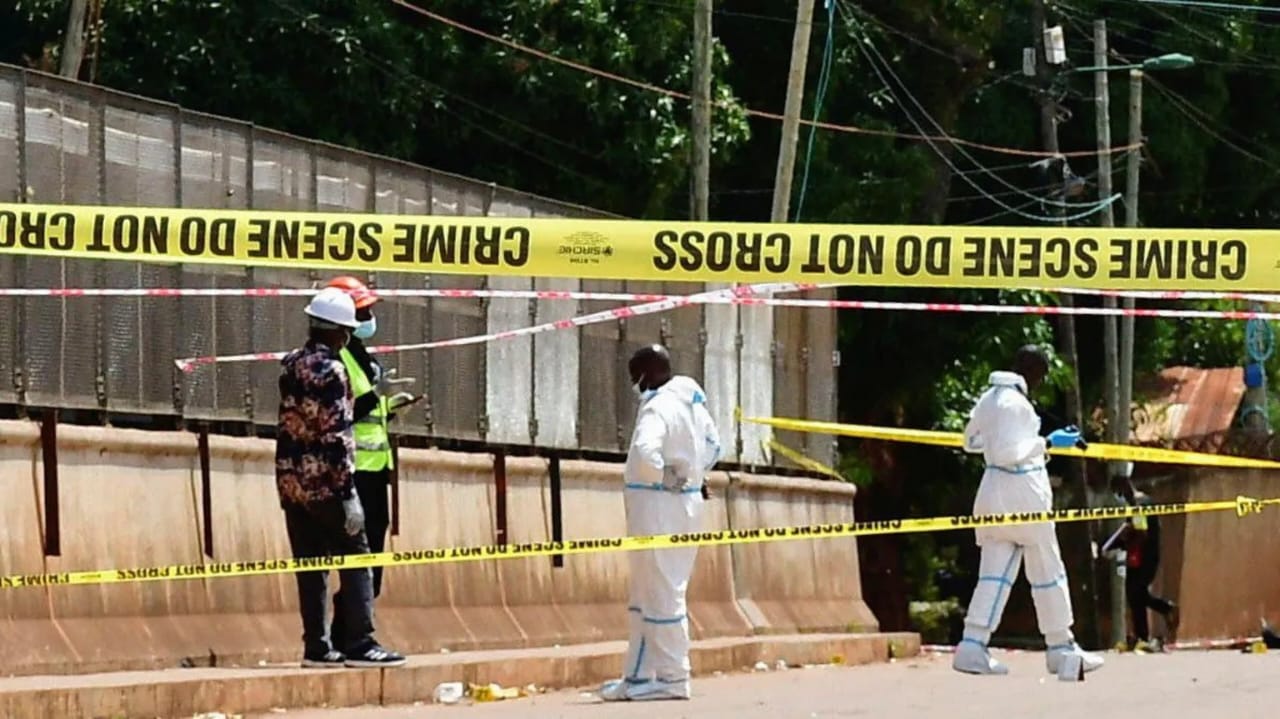
The bomb exploded at Eagle Square. But because of the warning Boyloaf had provided and the security measures that followed, the impact was reduced because it was not close to the venue.
Sadly, some people still lost their lives in the blast and others were affected by its consequences.
The incident eventually led to another hunt for Okah.
He was later arrested in South Africa, prosecuted alongside others and sent to prison.
About pardoning Okah.
Okah has suffered enough, and we suggest that the Nigerian government revisit the Okah brothers’ case and extradite Okah to Nigeria from South Africa to facilitate his release.
If the Federal Government can pardon terrorists and reintegrate them into the Nigerian military, then Okah can be very useful to the Nigerian government henceforth.
Therefore, we suggest that he be pardoned, released, and allowed to reunite with his family as he learnt his lesson.
Let us stop here for now.
Stay tuned for Part 3.

0 Comment(s)