Ukraine Hits Russian Oil Refinery After Ceasefire Collapse As Zelenskyy Accuses Trump Of Betrayal
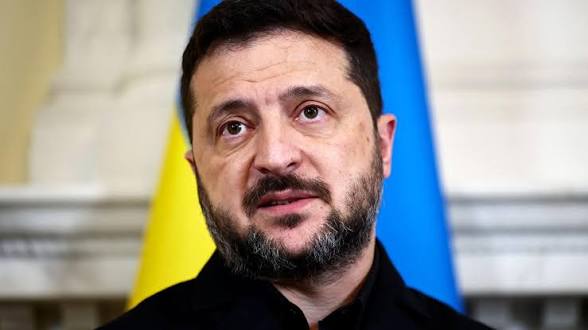
KYIV, Ukraine (AP) — Ukraine has resumed attacks on Russian oil refineries, with a drone strike triggering a fire at a facility in Russia’s Ryazan region early Thursday, October 15, amid escalating tensions between Ukrainian President Volodymyr Zelenskyy and US President Donald Trump over Washington’s approach to the war.
The attack occurred hours after Zelenskyy declared that a brief ceasefire arrangement had effectively ended, accusing Moscow of continuing its aerial bombardment of Ukrainian energy infrastructure despite US President Donald Trump’s call for both sides to halt such attacks.
The refinery, located approximately 300 kilometres (180 miles) southeast of Moscow, was hit by Ukrainian drones, according to a senior Ukrainian official who confirmed the strike on condition of anonymity because they were not authorised to speak publicly.
Russia’s Defence Ministry and Ryazan Governor Pavel Malkov also reported the incident, while Russian online news outlet Astra published what it described as a photograph showing flames at the facility.
The latest strike signals a renewed focus on Russia’s energy infrastructure as Ukraine seeks to disrupt revenue streams that help finance Moscow’s military operations.
Zelenskyy Declares Ceasefire Over, Warns of Renewed Attacks
Zelenskyy’s decision to resume attacks on Russian refineries follows growing frustration with Moscow’s continued strikes on Ukrainian energy facilities and what Kyiv describes as an increasingly unfavourable position adopted by Washington.
In an interview with the Financial Times published Thursday, the Ukrainian president indicated that his patience had run out and confirmed that attacks on Russian oil refineries would resume.
“We’re done,” Zelenskyy was quoted as saying.
The Ukrainian government maintained that it had complied with Trump’s demand for a temporary halt to attacks on energy infrastructure.
However, Kremlin spokesman Dmitry Peskov disputed Kyiv’s account, claiming that Ukraine had never stopped striking Russian refineries.
The conflicting statements could not be independently verified, leaving questions about the implementation and enforcement of the proposed ceasefire.
Ukraine Accuses Washington of Restricting Critical Military Support
Beyond the renewed attacks, relations between Kyiv and Washington have deteriorated over Ukraine’s access to military intelligence and communications technology.
Zelenskyy complained that Ukraine had been denied its usual access to Western intelligence concerning Russian ballistic missile attacks in recent days, despite agreeing to Trump’s call for a temporary halt to strikes on energy infrastructure.
He also raised concerns about restrictions affecting Ukraine’s use of US-made Starlink satellite communication terminals, which have become important for Ukrainian military communications, battlefield coordination and operational activities.
The Ukrainian leader’s complaints have intensified concerns about the reliability of American support at a critical point in the conflict.
Access to intelligence and secure communications is particularly important for Ukrainian forces seeking to detect incoming Russian missiles, coordinate defensive operations and maintain communication between military units.
Any restrictions affecting these capabilities could complicate Ukraine’s efforts to defend its territory and respond to Russian attacks.
However, the precise scope of the reported intelligence and Starlink restrictions, as well as their operational impact, was not independently established in the account.
Trump’s Reported Diesel Deal With Putin Sparks Fresh Controversy
Another major source of tension is a reported agreement involving Trump and Russian President Vladimir Putin concerning imports of Russian diesel.
The arrangement has attracted criticism because Western governments have imposed sanctions and other restrictions on Russia following its full-scale invasion of Ukraine.
Zelenskyy criticised the reported deal, arguing that continued commercial engagement with Moscow could provide Russia with additional resources to sustain its military campaign.
The Ukrainian president has also expressed frustration with Washington’s efforts to negotiate an end to the war, which have yet to produce a lasting settlement.
In an interview with British journalist Piers Morgan on Wednesday, Zelenskyy said he felt betrayed by Trump’s reported arrangement with Putin, the announcement of the energy ceasefire and the problems surrounding Starlink access.
His remarks underscore the growing divide between Kyiv’s expectations of continued American support and the Trump administration’s approach to negotiating with Moscow.
Moscow and Kyiv Continue Trading Blows
The latest refinery strike comes as Russian and Ukrainian attacks continue to cause casualties and damage infrastructure on both sides of the conflict.
Ukraine has repeatedly targeted Russian oil facilities, seeking to disrupt petroleum production, processing and distribution that contribute to Russia’s economy and wartime logistics.
Moscow, meanwhile, has continued launching attacks against Ukrainian cities and critical infrastructure, including facilities connected to the country’s energy supply.
The renewed exchanges highlight the difficulties facing efforts to secure even a temporary reduction in hostilities, particularly when both sides accuse each other of violating proposed arrangements.
Russia’s position, as presented by Kremlin spokesman Dmitry Peskov, is that Ukrainian attacks on its refineries never stopped. Kyiv, however, maintains that its actions followed Russia’s continued strikes against Ukrainian energy infrastructure.
Neither side’s broader claims about compliance with the proposed ceasefire could be independently verified from the available information.
Could the Rift With Washington Affect Ukraine’s War Strategy?
The deterioration in US-Ukraine relations raises questions about Kyiv’s ability to sustain its military operations if access to American intelligence, communications technology or other forms of assistance becomes more limited.
The United States has played a significant role in supporting Ukraine’s defence capabilities, while Washington’s diplomatic engagement with Moscow has become a central element of Trump’s stated efforts to end the conflict.
For Kyiv, the challenge is to defend against Russian attacks while maintaining the international support needed to sustain its military campaign.
For Washington, the competing priorities include pursuing negotiations, managing relations with Moscow and determining the level of continued support available to Ukraine.
The renewed attacks on Russian oil refineries could further complicate these efforts, particularly if Moscow responds with additional strikes or uses the attacks to challenge the proposed ceasefire.
As the war continues, the central question remains whether diplomatic negotiations can produce an arrangement that both sides are prepared to respect.
For now, Zelenskyy’s declaration that Ukraine’s restraint has ended, combined with the latest refinery strike and his public criticism of Trump, points to another period of heightened uncertainty for the war and the future of US-Ukraine relations.









0 Comment(s)