Six Years After Lekki - Nigeria Is Still Choosing to Forget
- by Muhammed, Abuja, HSN
- about 7 hours ago
- 140 views
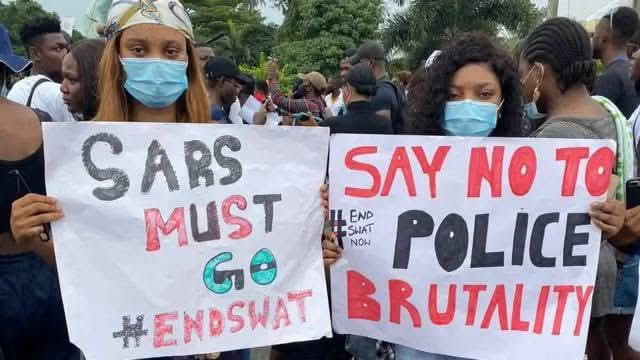
Six years after the Lekki shootings, the wounds remain open, justice remains elusive, and the truth is still waiting for a government brave enough to confront it. A nation that refuses to remember its victims risks repeating the violence that killed them.
On the evening of October 20, 2020, young Nigerians sat on the tarmac at the Lekki toll gate in Lagos, wrapped in the green-white-green national flag, singing the national anthem of a country they desperately wanted to believe in.
They were unarmed protesters demanding an end to police brutality, particularly the abuses associated with the now-disbanded Special Anti-Robbery Squad (SARS). They sang for justice. They sang for dignity. They sang for a Nigeria in which being young, poor or powerless would no longer make a citizen vulnerable to state violence.
Then the soldiers arrived.
The streetlights went dark. Questions arose over the toll gate's CCTV cameras. Gunfire shattered the atmosphere. What had been a peaceful demonstration became one of the most haunting episodes in Nigeria's recent history.
As the shooting unfolded, a young DJ livestreamed parts of the scene, carrying images of the unfolding horror beyond Lagos and into the homes and phones of people around the world. Nigerians watched, horrified, as a protest for accountability became a confrontation with the very state expected to protect its citizens.
By the following morning, however, another battle had begun: the battle over the truth.
Denials, conflicting official accounts and attempts to discredit reports of deaths followed the shooting. The army dismissed some reports as fake news, while public statements raised questions about whether live ammunition had been used and whether people had died.
Six years later, the tragedy of Lekki is no longer just about what happened that night. It is also about what Nigeria has done — and failed to do — since.
The bullets may have stopped flying, but the struggle over memory, responsibility and justice continues.
The Official Record Nigeria Cannot Ignore
The facts surrounding Lekki cannot be dismissed as rumours circulated by angry young people on social media. They cannot be brushed aside as political propaganda or reduced to a disagreement between protesters and the government.
In November 2021, a judicial panel of inquiry established by the Lagos State Government submitted its report after more than a year of hearings, testimonies and investigations.
The panel described the Lekki incident as a massacre and concluded that the force used by the Nigerian Army against peaceful and orderly protesters was unwarranted, excessive and unjustifiable.
Its report recorded 48 casualties, including nine confirmed deaths and four presumed deaths. It also noted that a forensic pathologist had presented information concerning 96 other bodies to the panel.
The findings raised further questions about the deployment of soldiers, including evidence that the army had been deployed at the request of the state government — a detail that contradicted the governor's earlier account. The panel also reported that CCTV footage provided by the toll gate operator had been tampered with.
These were not findings issued by a foreign government or an opposition political party. They came from an inquiry commissioned by the Lagos State Government itself.
That distinction matters.
A government may disagree with witnesses. Officials may challenge particular interpretations of events. Evidence may require further investigation. But once a state establishes a judicial panel, receives its findings and promises action, it assumes an obligation to confront the conclusions through transparent and lawful processes.
The real scandal is what followed.
A report was received. A committee was formed to review it. A white paper was promised. Yet accountability for the killings has remained elusive, and no meaningful criminal prosecution of those responsible for the shooting has emerged.
For the families who lost loved ones, the passage of time has not brought closure. For Nigerians who watched the events unfold, the absence of accountability has become a troubling reminder that official investigations can produce findings without producing justice.
Meanwhile, Amnesty International has documented cases of EndSARS protesters detained without trial, illustrating the painful imbalance between the state's ability to punish dissent and its willingness to investigate alleged abuses by its own security forces.
The message is difficult to ignore: the machinery of the state can move swiftly against citizens, but painfully slowly when its own agents must answer questions.
Remembering the Dead Has Become an Act of Resistance
In a country serious about justice, an anniversary should be an opportunity for reflection, mourning and a renewed commitment to preventing a recurrence.
In Nigeria, even remembrance has become contentious.
In 2022, police fired tear gas at people who gathered around the Lekki toll gate to commemorate the shootings. In 2023, security forces were deployed in significant numbers, while the Lagos State Police Command warned against gatherings around the site.
The symbolism was unmistakable.
Young Nigerians had once assembled there to demand an end to brutality. Later, some returned to remember those who died, only to encounter another heavy security presence.
What does it say about a democracy when citizens must worry about being dispersed, harassed or arrested simply for commemorating people killed during a protest?
Grief should not be treated as a threat to public order. Remembrance should not require the permission of those whose institutions are implicated in the tragedy being remembered.
A government confident in its commitment to justice would not fear the anniversary of a national tragedy. It would use the occasion to publish outstanding findings, identify unresolved questions, support victims' families and demonstrate that the rule of law applies to everyone.
Instead, Nigeria has allowed the passage of time to do some of the work that accountability should have done.
Time has softened public debate. Political statements have blurred the edges of the official record. And the longer justice is delayed, the easier it becomes for the tragedy to be recast as a controversy rather than confronted as a matter of public responsibility.
What EndSARS Should Have Taught Nigeria
Six years after Lekki, the lessons of EndSARS remain painfully relevant. At least three deserve particular attention.
First, the protesters had a legitimate grievance.
The EndSARS movement did not emerge from nowhere. It grew out of years of complaints about police harassment, extortion, torture, arbitrary arrests and extrajudicial killings.
For many young Nigerians, SARS had become a symbol of a security system that too often treated ordinary citizens as suspects rather than people entitled to protection under the law.
On October 11, 2020, the government announced that SARS would be disbanded. That announcement was a recognition that the complaints had become impossible to ignore.
The concession should have opened the door to comprehensive police reform, independent investigations, stronger safeguards against abuse and meaningful remedies for victims.
Instead, the violence at Lekki and the prolonged struggle over accountability deepened public distrust.
A government cannot acknowledge a grievance, announce a response and then treat those who raised the grievance as enemies of the state. The legitimacy of peaceful protest does not disappear because a movement becomes politically inconvenient.
Second, impunity is not inevitable. It is a political choice.
Establishing a judicial panel is important. Taking testimony, gathering evidence and producing a report are necessary steps.
But a report is not justice.
Justice requires the authorities to act on credible findings, investigate individual responsibility, prosecute cases where evidence supports criminal charges, compensate victims and reform the institutions that allowed abuses to occur.
This is where Nigeria's response to Lekki has fallen short.
Holding security personnel accountable is difficult. It may expose failures of command, implicate senior officials and provoke resistance within powerful institutions. Yet these difficulties are precisely why accountability matters.
When a government refuses to pursue credible allegations against its own security forces, it weakens the deterrent effect of the law.
The consequences extend beyond one night in Lagos. A police officer or soldier deployed against a crowd may conclude that allegations of excessive force will eventually disappear into official statements, administrative committees and the passage of time.
That is how impunity becomes institutionalised: not necessarily through a declaration that wrongdoing is acceptable, but through repeated demonstrations that wrongdoing carries little consequence.
Every unresolved case becomes a lesson. Every unpunished abuse becomes a warning to citizens and a reassurance to those who wield state power.
Third, Nigeria's young people were not the enemy.
It is convenient to portray the EndSARS generation as unruly, politically manipulated or influenced by foreign interests. Such descriptions avoid the harder question: why did so many young Nigerians feel compelled to take to the streets in the first place?
Across multiple cities, protesters organised food, first aid, legal assistance and communication networks. Students, nurses, musicians, traders and other ordinary citizens contributed to a movement that operated without the traditional structures of political parties.
For a brief but extraordinary period, Nigerians demonstrated that collective action could transcend established political divisions.
The movement gave many young people a renewed sense of ownership over their country. It showed that citizenship could mean more than voting periodically, enduring hardship and waiting for politicians to deliver promises.
It would be dishonest, however, to pretend that every event associated with the protests remained peaceful. Looting, arson and other acts of violence occurred in the unrest that followed, causing harm to communities and businesses. Those responsible for such crimes should be held accountable under the law.
But acknowledging that violence does not erase the legitimacy of the original demands. Nor does it justify shooting at peaceful protesters.
Both realities can be recognised without contradiction: criminals exploited the unrest, and soldiers opened fire on citizens who had gathered to protest.
The problem is that the violence committed by some has too often been used to distract from the violence allegedly committed by agents of the state.
A country cannot build justice by selectively remembering the crimes of its citizens while avoiding scrutiny of the institutions empowered to use force on their behalf.
The Dangerous Politics of Forgetting
Forgetting is not always an innocent consequence of time. Sometimes it is encouraged by political convenience.
In 2023, a senior politician questioned whether the Lekki killings could properly be described as a massacre. That same year, the Lagos State governor acknowledged that lessons had been learnt and indicated that he would have responded differently to the shootings.
Such statements illustrate how the public record can gradually be softened. A documented tragedy becomes a debate over terminology. A question of accountability becomes an argument about interpretation. The focus shifts from the people who died to the political cost of describing how they died.
Words matter because they shape what a society considers possible.
If the deaths of protesters can be reduced to an unresolved dispute, responsibility can remain unresolved indefinitely. If the evidence produced by an official inquiry can be treated as optional, future governments may conclude that establishing a panel is enough, regardless of what follows.
And if the public grows accustomed to unanswered questions, the next generation may inherit not only the original injustice but also the belief that challenging it is pointless.
That is the quieter danger of forgetting: it does not merely conceal the past. It lowers expectations for the future.
Compensation Is Necessary. Accountability Is Indispensable.
There have been efforts to advance legislation for an EndSARS victims' compensation fund, including a bill that received a hearing in the Senate.
Such an initiative deserves serious consideration. Families who lost breadwinners, children, siblings and loved ones should not be left to bear the financial and emotional consequences of state violence alone.
But compensation must not become a substitute for accountability.
Money can provide some material relief. It cannot establish who authorised an unlawful deployment, who gave an order, who fired the shots or who failed to intervene when citizens were in danger.
Nor can compensation alone restore public confidence in institutions that have failed to provide convincing answers.
The families of those killed deserve transparent investigations, the identification of those responsible where the evidence permits, fair trials and appropriate punishment where guilt is established. They deserve meaningful compensation and an official apology that acknowledges the harm done rather than merely expressing regret for the controversy that followed.
They also deserve something less tangible but equally important: the assurance that their loved ones will not be reduced to statistics in an old report.
A compensation fund can be part of justice. It cannot be the whole of it.
Six Years Later, the Question Remains
October 20 is more than a date on Nigeria's political calendar. It is a test of the country's willingness to confront an uncomfortable truth about the relationship between citizens and the state.
On that evening in 2020, young Nigerians gathered at Lekki demanding a country that would protect them, respect their rights and listen when they raised their voices.
They carried their national flag. They sang their national anthem. They appealed to the ideals their country claimed to represent.
The state should have protected their right to assemble peacefully. Instead, the shooting left the nation confronting allegations of grave abuses, conflicting official accounts and a painful absence of accountability.
Six years later, the families continue to remember. The survivors carry their experiences. The evidence gathered by the judicial panel remains part of the public record.
The question is whether those in power are prepared to confront that record honestly.
Nigeria does not need another anniversary of speeches that promise lessons without demonstrating them. It does not need another committee whose conclusions lead nowhere. It does not need political leaders to express regret while leaving the central questions unanswered.
It needs transparency. It needs accountability. It needs justice that does not depend on the rank of the accused or the political sensitivity of the case.
Above all, it needs the courage to tell the truth.
A nation that cannot acknowledge the suffering of its own citizens will struggle to convince them that their lives matter. A government that cannot act on the findings of its own inquiry cannot credibly claim that the rule of law is stronger than political expediency.
And a society that allows the deaths of young people to fade into an annual ritual of remembrance, without demanding consequences, risks teaching its future generations that peaceful protest is futile and state power is beyond scrutiny.
The young Nigerians who sat at Lekki asked their country to listen. They asked for dignity, accountability and the right to live without fear of those sworn to protect them.
They deserved answers then. Their families deserve answers now.
Six years after Lekki, the most important question is no longer whether Nigeria remembers what happened. It is whether Nigeria is willing to do what justice demands.
Because a country that refuses to confront the truth about its past does not leave that past behind. It carries it forward — until another generation is forced to ask the same questions, mourn the same losses and demand the same justice.
And when that day comes, Nigeria's greatest failure will not be that it forgot the names of the dead.
It will be that it knew what happened, knew what needed to be done, and chose not to act.


0 Comment(s)