𝐎𝐠𝐨𝐧𝐢𝐥𝐚𝐧𝐝 𝐎𝐢𝐥 𝐑𝐞𝐬𝐭𝐚𝐫𝐭 𝐒𝐩𝐚𝐫𝐤𝐬 𝐅𝐫𝐞𝐬𝐡 𝐓𝐞𝐧𝐬𝐢𝐨𝐧𝐬 𝐚𝐬 𝐈𝐣𝐚𝐰 𝐘𝐨𝐮𝐭𝐡 𝐋𝐞𝐚𝐝𝐞𝐫 𝐂𝐡𝐚𝐥𝐥𝐞𝐧𝐠𝐞𝐬 𝐏𝐢𝐩𝐞𝐥𝐢𝐧𝐞 𝐒𝐮𝐫𝐯𝐞𝐢𝐥𝐥𝐚𝐧𝐜𝐞 𝐌𝐨𝐧𝐨𝐩𝐨𝐥𝐲
- by Kalaboy, Port Harcourt, HSN
- about 6 months ago
- 426 views
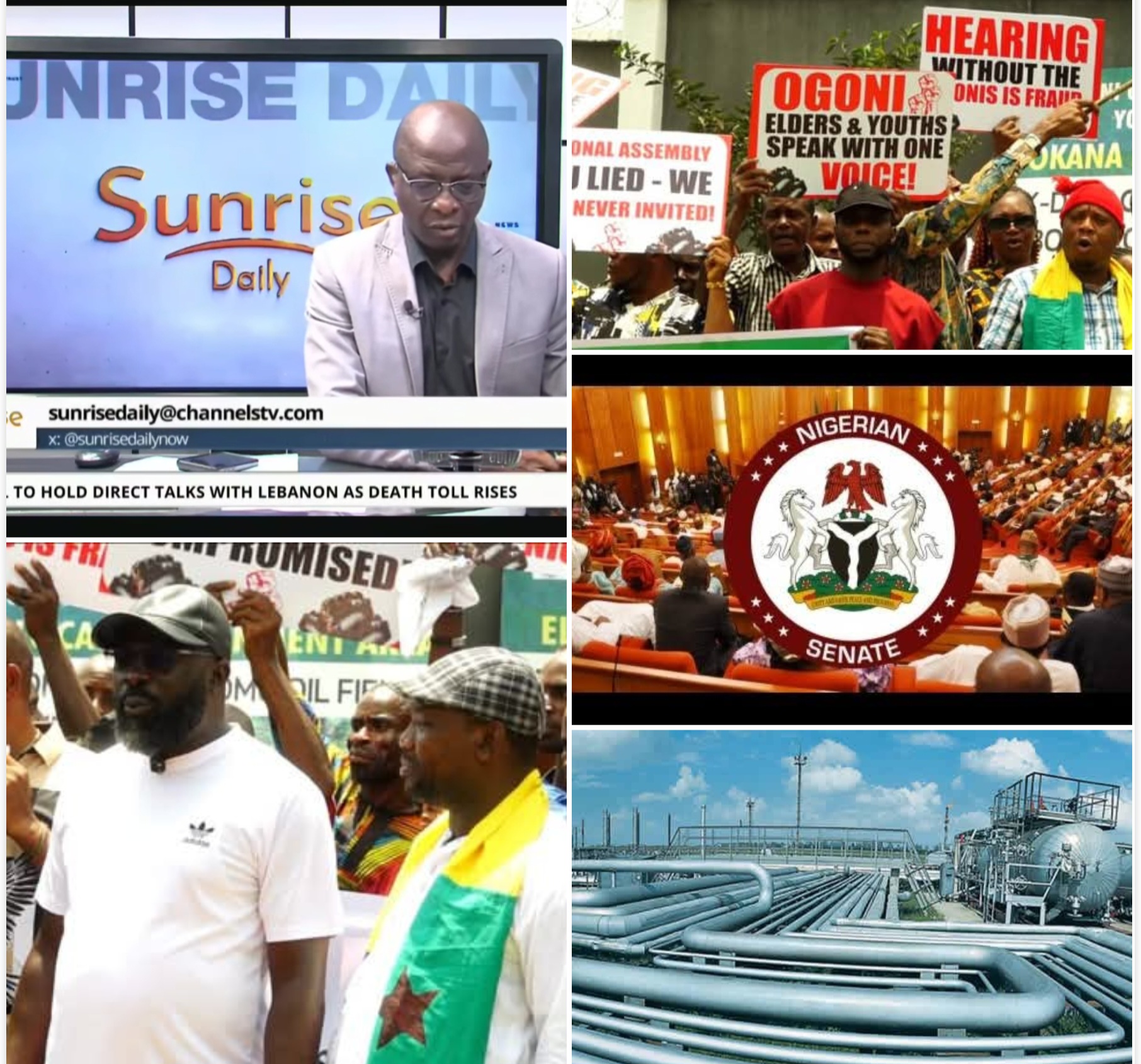
𝑵𝑨𝑺𝑺 𝑯𝒐𝒖𝒔𝒆 𝑪𝒐𝒎𝒎𝒊𝒕𝒕𝒆𝒆 𝑭𝒂𝒊𝒍𝒆𝒅 𝒕𝒐 𝑰𝒏𝒗𝒊𝒕𝒆 𝑼𝒔 𝑫𝒆𝒔𝒑𝒊𝒕𝒆 𝑷𝒆𝒕𝒊𝒕𝒊𝒐𝒏 𝑺𝒖𝒃𝒎𝒊𝒔𝒔𝒊𝒐𝒏
𝐴𝑠 𝑇ℎ𝑒𝑜𝑝ℎ𝑖𝑙𝑢𝑠 𝑅𝑎𝑖𝑠𝑒𝑠 𝐴𝑙𝑎𝑟𝑚 𝑂𝑣𝑒𝑟 𝑆𝑒𝑖𝑧𝑒𝑑 𝑂𝑖𝑙 𝑉𝑒𝑠𝑠𝑒𝑙, 𝐷𝑒𝑚𝑎𝑛𝑑𝑠 𝑁𝑖𝑔𝑒𝑟𝑖𝑎–𝑈.𝑆. 𝐽𝑜𝑖𝑛𝑡 𝐼𝑛𝑣𝑒𝑠𝑡𝑖𝑔𝑎𝑡𝑖𝑜𝑛
Nearly three decades after oil production was halted in Ogoniland, indications that the federal government may resume drilling have reignited a complex debate over control, inclusion, and accountability in the Niger Delta.
The issue, which has drawn sharp divisions among stakeholders, was brought into focus during an interview on Channels Television with Dr. Alaye Tare Theophilus, President of the Ijaw Youth Council. While traditional rulers in Rivers State have publicly backed the current centralized pipeline surveillance structure and urged the government to resist calls for decentralization, Dr. Theophilus offered a sharply different perspective.
Responding to questions about the apparent divide, he rejected the notion that community leaders support maintaining the status quo. According to him, stakeholders across Ogoniland and Rivers State have consistently advocated for decentralization, arguing that the current system excludes key local actors.
He framed the demand not as a power struggle, but as a call for inclusion. Communities, he said, want a sense of ownership in oil and gas activities taking place in their environment. This includes what he described as the “first right of refusal”—the opportunity for capable local stakeholders to be considered first in contracts and operational roles.
But is the system fundamentally broken, or is the agitation merely about representation? Pressed on whether the existing structure is functional, Dr. Theophilus was unequivocal. In his view, the arrangement has been monopolized and is failing to achieve its core objectives.
He pointed to persistent crude oil theft as evidence, alleging that organized illegal operations continue “through the back door” despite surveillance efforts. He cited cases of vessels linked to Nigerian individuals being intercepted abroad with stolen crude, suggesting that systemic weaknesses remain unaddressed.
According to him, the concentration of surveillance responsibilities in limited hands has created gaps that enable these activities. Rather than improving efficiency, he argued, it has reduced transparency and accountability. A more inclusive system, he suggested, would allow multiple stakeholders to “checkmate the excesses of everybody.”
The consequences, he warned, are evident in Nigeria’s oil output. Despite having the capacity to produce over two million barrels per day, the country continues to fall short of that benchmark, hovering between 1.2 and 1.6 million barrels.
Beyond surveillance, the question of restarting oil production in Ogoniland adds another layer of urgency. Since 1995, the region has seen little to no exploration activity, yet it holds significant untapped potential. Dr. Theophilus noted that Ogoniland alone could contribute up to 800,000 barrels per day if operations resume under the right conditions.
However, trust remains fragile. When asked about reports that a National Assembly committee had invited him and his team for discussions, he dismissed the claim, stating that no such invitation was extended. Instead, he revealed that the Ijaw Youth Council had submitted a formal petition alongside a peaceful protest, calling for an investigation into the surveillance system and related allegations.
He questioned the transparency of the legislative process, noting that only one company was reportedly invited to a key committee session despite the involvement of multiple stakeholders. To him, this raised concerns about fairness and the true intent of the engagement.
Among the most serious allegations in the petition is the case of a vessel reportedly seized in the United States carrying over 1.9 million barrels of Nigerian crude. Dr. Theophilus highlighted discrepancies surrounding the vessel’s ownership and operational clearance, citing statements from the owner, the vessel’s master, and records from the Corporate Affairs Commission.
He called for a joint investigation involving Nigerian authorities, the National Assembly, and U.S. institutions to uncover the truth and hold those responsible accountable.
As the federal government moves closer to decisions on Ogoniland and broader oil sector reforms, the tensions between centralization and inclusion remain unresolved. For Dr. Theophilus and the communities he represents, the path forward must involve transparency, shared responsibility, and a restructuring of the current system—before oil begins to flow again.



0 Comment(s)